|
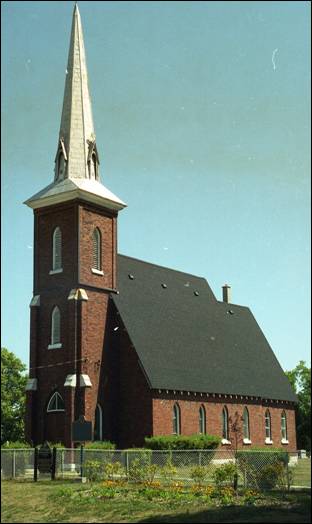
St. Paul’s Anglican Church 2013 |
|
|
|
|
|
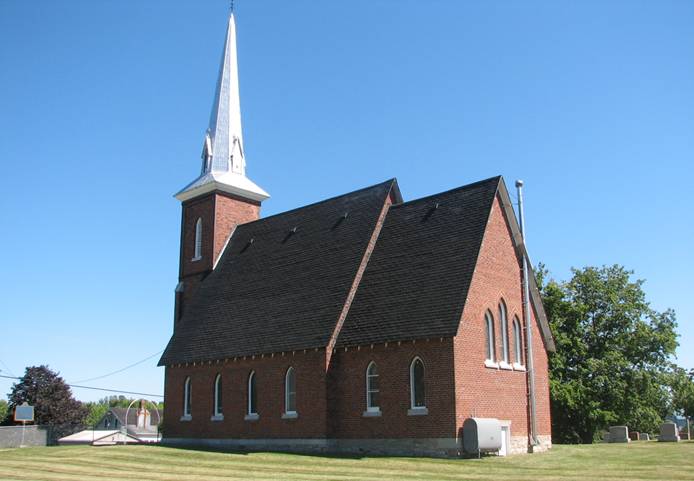
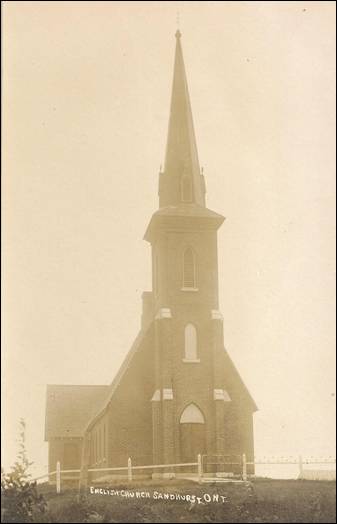
St. Paul’s Church, Sandhurst, c1900 (left)
and 1989 (right) |
|
|
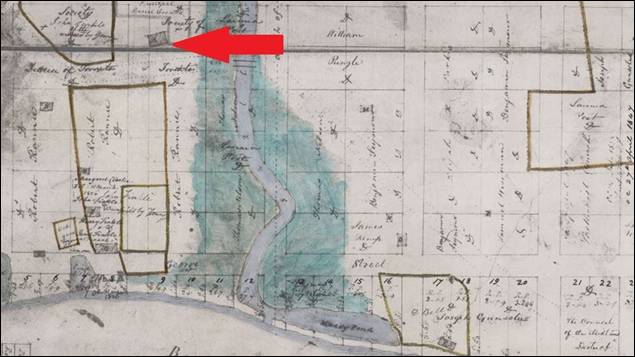
1823 Map of Fredericksburgh Village showing location of St. Paul’s
church |
|
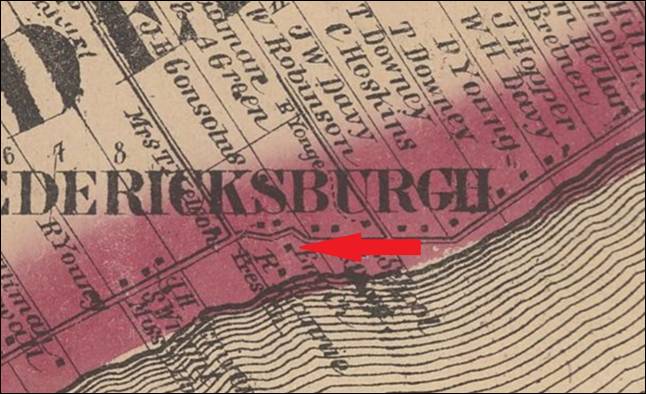
Wallings’ 1860 Map
showing location of St. Paul’s |
|
The First Church Building The first St. Paul’s was
built in 1791, It is said to have been a log building, located in what is now
St. Paul’s Cemetery, situated east to west,
rather than north to south as the current church is. It burned down 25 years to
the day it had been opened – Christmas Day, 1816.
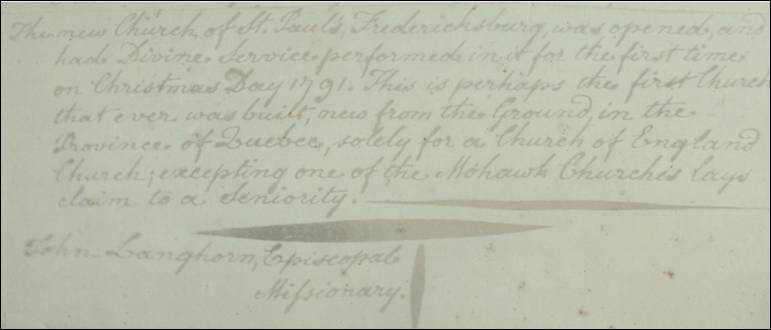
Extract from Rev. John Langhorn’s Register “The new Church of St. Paul’s
Fredericksburg, was opened and had Divine Service performed in it for the
first time on Christmas Day, 1791. This is perhaps the first
Church that ever was built, new from the Ground in the Province of Quebec,
solely for a Church of England Church; excepting one of the Mohawk
Churches lays claim to a Seniority. John Langhorn, Episcopal Mifsionary. |
|
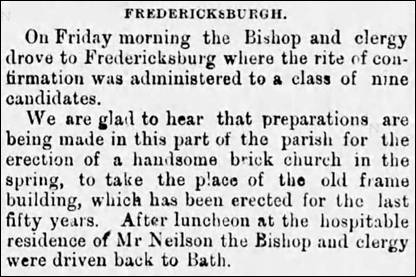
The Second Church Building Little is known about the
second church building. It was a frame building,
erected circa 1818. It, too, was apparently
located south of the existing building, and built running east to west.
December 11, 1875, Kingston Daily News |
|
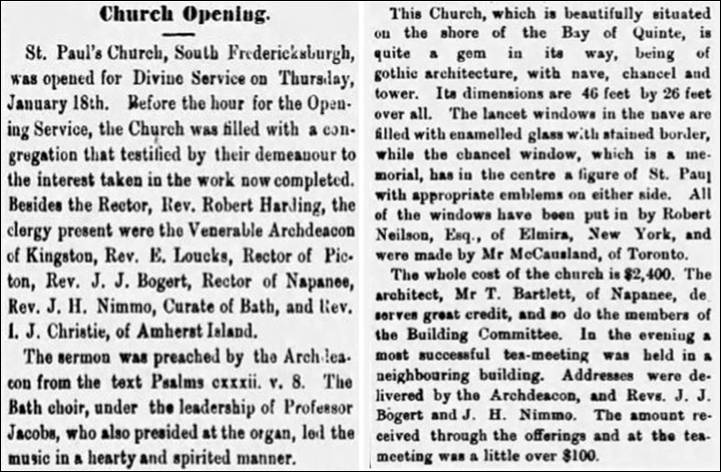
The Third (and current) Church Building “Allow me through your column to relate a little
occurrence which I presume will be of interest to many of your readers. In
going back to the old county of my birth, [South] Fredericksburgh, I saw that
they had erected a fine brick Episcopal Church, more commonly called the English
Church, on the old spot where the old log church had stood in which our
forefathers, the first settlers of Canada, had worshipped. It was on that
spot, where the prayers of our forefathers, the old U.E.’s first ascended to
their Heavenly Father in grateful thanks for His loving kindness and
protection in their wilderness home. It was on that spot where the first
services of the English Church were held in this part of the wild woods of
Canada. It was on that spot where the Gospel was first proclaimed to fallen
man by the Rev. [John] Langhorn. From that old log church, it may be said,
they graduated to a frame one and from the old frame to the beautiful brick
structure now adorning the old spot. The church is a beautiful modern structure –
something Gothic in its style – with stained glass windows. The chancel
window is a very fine one, and as the church is called St. Paul’s Church,
there is a beautiful figure in stained glass in the chancel window
representing the great Apostle of the Gentiles. The church does great credit
to those through whose united efforts it has been erected and great credit is
also due to the adherents of other bodies who kindly assisted. The church, with its tower pointing heavenward, will
stand as a monument to the memory of those true members of the church when
they shall have passed away and their dust sleeping in the old churchyard
with their fathers. There are many endearing ties to the old spot – our fathers
and mothers are sleeping there – the old U.E.’s who suffered all the
privations of a wilderness home sooner than desert the old flag, are resting
there, their toils being ended. The old spot will ever be dear to a Briton
and the old slabs will be gazed upon by generations yet unborn, and the ashes
of those true men will be revered and their memories cherished as noble sons
worthy the name of Britons. In short, the old spot must be dear to many, as
kindred ashes are deposited in the old ground attached to the old church; and
many will feel constrained to give thanks to our friends who have erected the
church, as it will call us there to the sacred spot to perpetuate the
memories of the dear departed. The church was dedicated on the 18th
inst. by the Rev. Archdeacon Parnell, who preached a very interesting sermon
and one suited to the occasion. He was also surrounded by a large number of
clergymen from other parishes to assist him in his duties. After which a tea meeting followed, the receipts of which, together
with donations added much to the funds of the church. All passed off pleasantly
and to edification, Yours truly, One of the old stock. – E. Sills Picton, January 28, 1877” February 8
1877, dominion Churchman |
|
Jan 27 1877 Kingston Daily News |
|
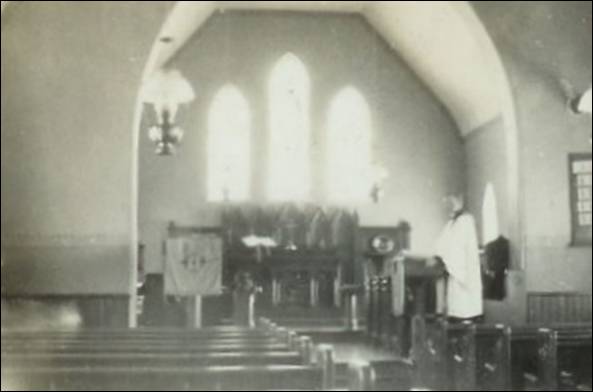
Interior of St. Paul’s 1925 |
|
August 30 1893, Church Guardian |
|
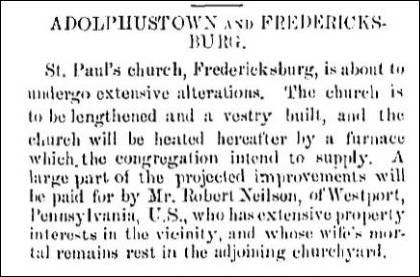
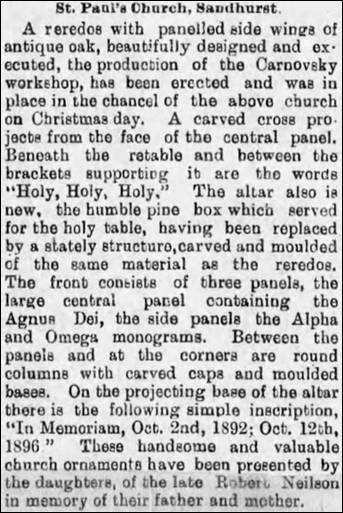
January 5 1899, Weekly British Whig |
|
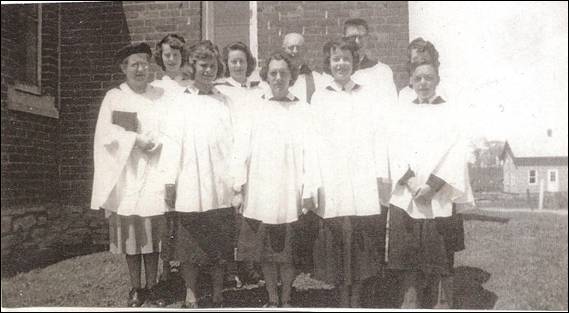
St. Alban’s Choir 1951 (L-R)
Edna Ham (organist), Marjorie Bartlett, Katherine Ham, Joan Punchard, Elsie
Rawlinson, Rev. Beauchamp Payne, Mabel Bartlett, Harold Babcock, Annie Bartlett,
Neil Babcock |
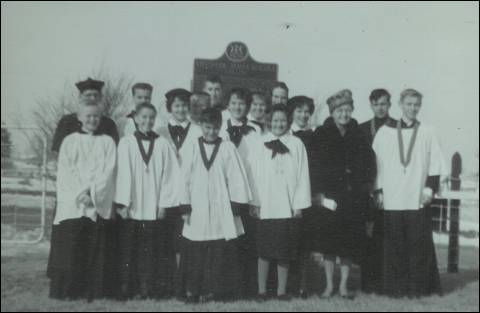
St. Alban’s Choir 1964 Back: Rev. J.G.
Findlater, Bill Warwick, Roland Morrow, Jeff Holt. 2nd Row: Maureen
Waitson, Marilyn Spearing, Donald Warwick 3rd Row: Linda
Rowe, Beverley Hudson, Nancy Morrow, Front Row: Paul
Waitson, Peter Warwick, Peter Quevellon, Linda Hudson, Mrs.
Findlater, Stephen Waitson. |
|
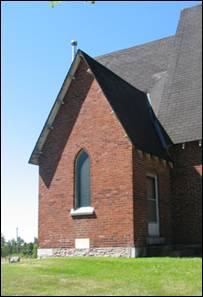
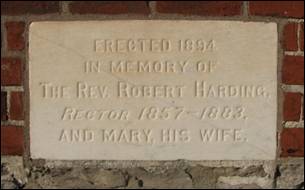
East Side Showing Location of Plaque |
Tablet at the East Side of the Church |
Tablet on the Side of the Church ERECTED 1894 IN MEMORY OF THE REV. ROBERT HARDING RECTOR 1857-1883, AND MARY, HIS WIFE |
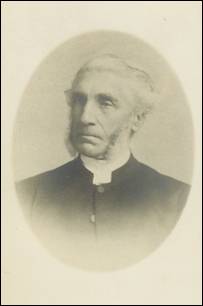
Rev. Robert Harding |
|
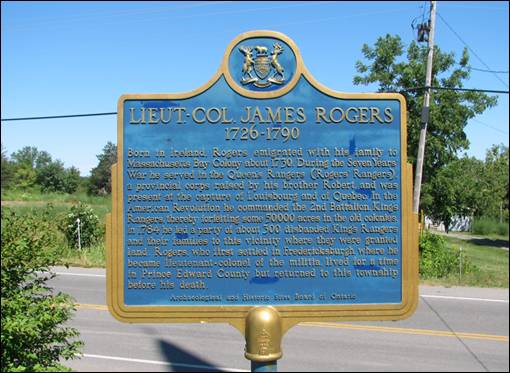
Rodgers Plaque in Front of Church Unveiled on June 16 1963 |
LIEUT.-COL. JAMES ROGERS 1726-1790 Born in Ireland, Rogers
emigrated with his family to Massachusetts Bay colony about 1730. During the Seven Years’ War he served in
the Queen’s Rangers (Rogers’ Rangers), a provincial corps raised by his
brother Robert and was present at the capture of Louisbourg
and of Quebec. In the American
Revolution he commanded the 2nd Battalion Kings Rangers thereby
forfeiting some 50,000 acres in the old colonies. In 1784 he led a party of about 300
disbanded Kings Rangers and their families to this vicinity where they were
granted land. Rogers, who first
settled in Fredericksburgh where he became lieutenant-colonel of the militia,
lived for a time in Prince Edward county but returned to his township before
his death. Archaeological and Historic
Sites Board of Ontario |