|
Hawley Church 2010 |
|
|
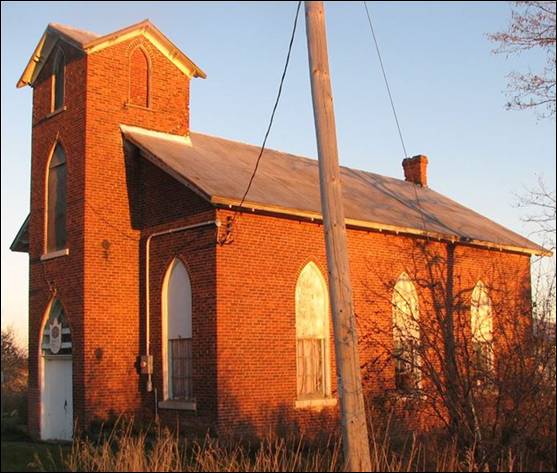
The History The church at Hawley was situated
at South Fredericksburgh Township, Concession 2, Part of Lot 23, on what is known today as
County Road 22. It was built in 1870-71 by
the Bethel Congregation of the Wesleyan Methodist Church. The opening services took
place on February 26, 1871. The land, ‘donated’ by the
Bristol and Fretts families, was transferred in 1874. The church was closed by the
Kingston Presbytery in 1967. The Hawley Women’s Institute
continued to use the building until it was finally sold in the early 2000s. The building is still
standing today, privately owned. |
|
|
The Deeds Part 1 - May 29 1874 James Fretts & Caroline
Fretts [his wife] Trustees of the Bethel
Congregation of the Wesleyan Methodist Church: George Asselstine, Peter
Bristol, James Fretts, John W. Bristol, Henry Huffman, Alexander Ross,
Charles Willett Huffman 1.00 – 6.600 Square Feet Composed of part of the west
half of lot number 23 in the second concession of the township of
Fredericksburgh, commencing on the line
between the east and west halves of said lot number
23 at the intersection of the
public road now running across said lot thence westerly along the
south side of said public road sixty feet, thence southerly, parallel
with the western limits of said lot one hundred and
ten feet, thence in an easterly
direction parallel with the said road sixty feet more or less to the line running between
the East and west halves of said lot 23, thence in a northerly
direction along said line between East and West half of said
lot one hundred and ten feet
more or less to the place of beginning. To build a church and other
buildings to permit building to be used as a church by the Wesleyan
Methodists Part 2 – May 30 1874 Peter Bristol & Mattie
Bristol [his wife] Trustees of the Bethel
Congregation of the Wesleyan Methodist Church: George Asselstine, James Fretts, Peter
Bristol, John w. Bristol, Henry Huffman, Alexander Ross, Charles Willett
Huffman 1.00 – 1,000 Square Feet Commencing on the line between the East and
west halves of said lot number 23 at the
intersection of the public road now running across said lot, thence easterly, along the south side of the
said public road, seventy feet, thence southerly, parallel with the western
limit of said lot one hundred feet, thence in a westerly direction parallel with
the said road seventy feet to the line between the east and west halves of said lot number 23, thence in a a
northerly direction along said line between the east and west halves of said lot one hundred feet to the place of beginning. |
|
|
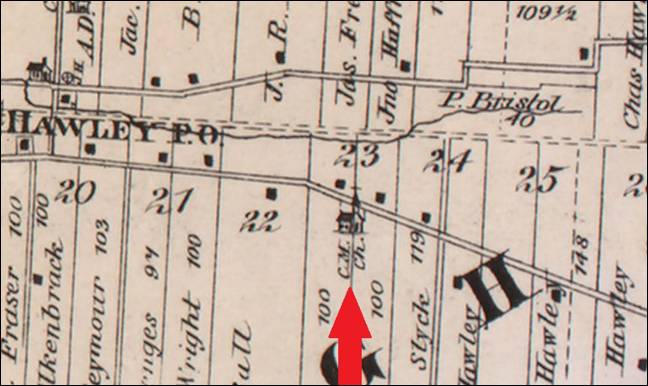
Meacham’s 1878 Atlas showing the Hawley Church |
|
|
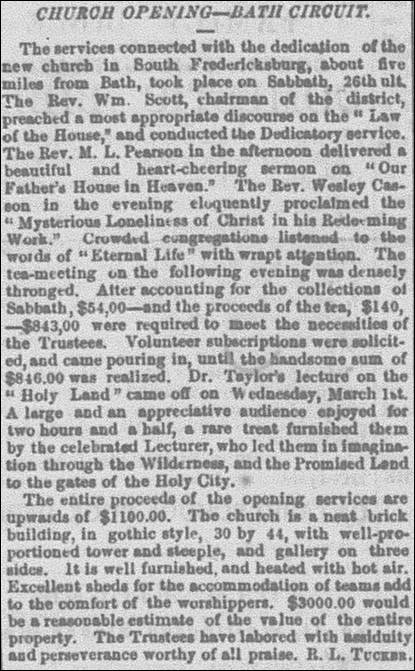
March 8 1871 Christian Guardian |
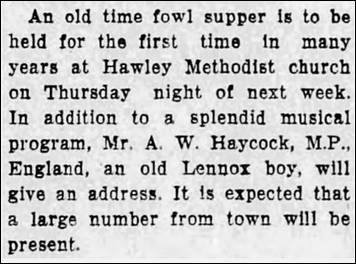
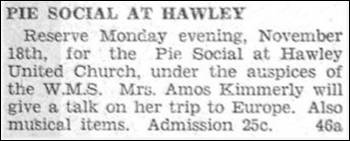
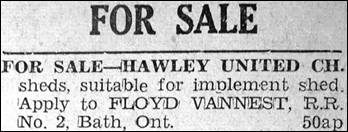
September 1924 Kingston Daily Standard
November 1929 Napanee Beaver
December 1837 Napanee Beaver |
|
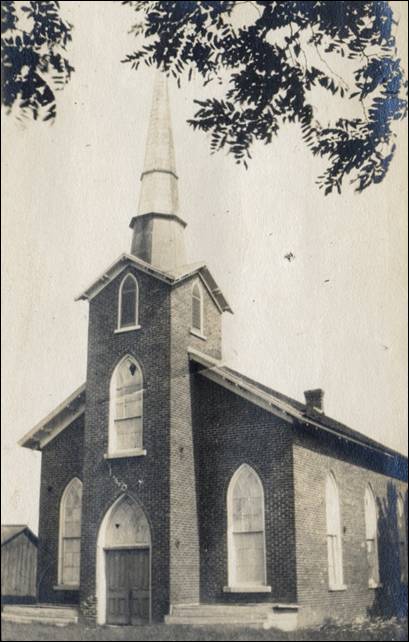
Hawley Church with Steeple Early 1900s |
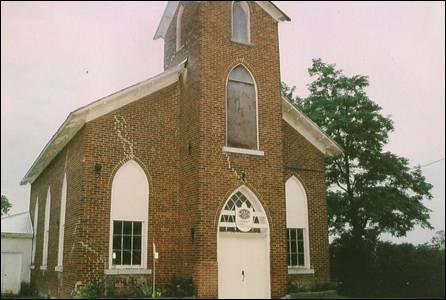
Hawley Church After Closing Used by Women’s Institute |
|
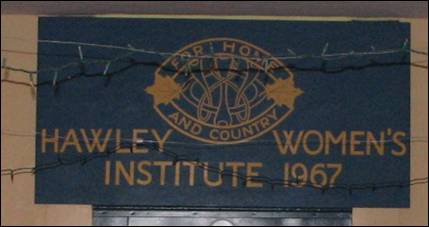
Women’s Institute Banner |
|
|
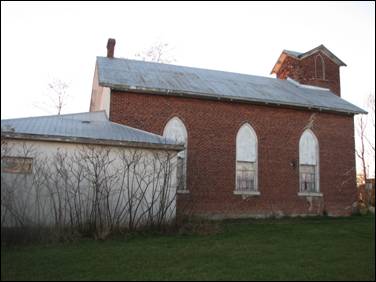
East Side of Hawley Church |
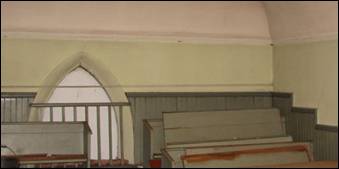
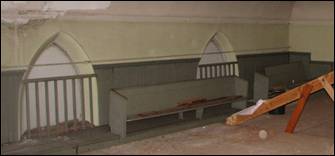
Interior – Gallery after closure
|
|
A Rural Church Dies but the Faith Continues June 30 1967 Kingston Whig
Standard “We are here to mark the last moments of a dying
church,” said Rev. John Neal of Bath, as he preached the last sermon to be
preached in the pulpit of Hawley United church last Sunday. “We must ask,” he
continued, “why did it have to die?’ “We are living in a convulsive time. Bible reading
in the home is disappearing, the prayer meeting has gone. The evening service
is almost gone. We have heard that God is dead, the virgin birth never
occurred, that Christ never died and rose again. We are told to forget words
such as “Heaven.” The neat brick church at Hawley between Bath and Napanee
was crowded; even the gallery was filled on three sides for this
commemorative service. Families who had worshipped in the church for three, even
four generations, were in the pews in family groups, some from long distances.
There were former members and adherents from Kingston, Ottawa, Toronto and Belleville,
with many from nearby places like Melrose and Odessa. The congregation seemed subdued, a little
bewildered. Yet later, when all shared a picnic dinner on the grounds, there
was friendly renewal of acquaintances, cheerful acceptance of the facts of
their loss. During the early part of the service, sun flooded
the little church, with its Gothic arched windows, the design repeated on the
polished wood surrounding the gallery, it shone on the rose carpet of the
chancel and the matching chancel chairs, picked up the brilliant colours of the
Jonassen murals which dominates the chancel. The chancel, rebuilt in 1956, gives the church an
attractively modern appearance. On Sunday, the colours of the Jonassen figure
of Christ, vivid blues and purple, with brilliant white, were picked up in
the baskets of flowers flanking the picture. The rose tones of the chancel
were repeated by fragrant rose peonies. Clayton Fretts, a lifelong member of the church,
told its story from the chancel. The early part of the story is still
unwritten history. It is known that there was a Methodist congregation around
Hawley and that the Bath Circuit, to which Hawley later belonged, was formed
in 1845. But it was not until 1856 that Hawley is listed as a preaching appointment. The church, which closed last Sunday was built in
the years 1870-71. The Christian Guardian of February and March, 1871,
describes the opening services. One of the guest preachers was Rev. M.L.
Pearson, of Odessa. His distinguished grandson’s letter of regret that he
could not be present was read to the congregation last Sunday. The Christian Guardian describes the building aptly,
and the description still fits. “The church is a neat brick building, in
Gothic style, 30 x 44, with well-proportioned tower and steeple and gallery
on three sides.” One feature of Hawley Church opening in 1871 was a
lecture on the Holy Land, a lecture which lasted two and a half hours. A tea
meeting and volunteer subscriptions added to the “handsome sum” of $1,100
raised during the opening ceremonies. On Sunday, the day of its closing, there were two
families present who had worshipped for four generations in Hawley Church,
the Cuthills and the Huycks.
Besides this there were at least a dozen families present whose members had
worshipped there for three generations. Why did Hawley Church have to close its doors? It is
one of 48 churches in Belleville Presbytery to be amalgamated this year. The
pastor, Mr. Neal, tried to find some of the answers. He pointed out that in a
United Church population of 3,000,000 in Canada, only 67 candidates have been
ordained for the ministry this year. Two hundred were needed. His closing advice to his congregations, many of
whom will now attend Bath church was “Stand among the sweeping winds of change
and cling tenaciously to Him who never changes. You may lose your church but
you cannot lose Christ unless you choose to do so.” Unlike other neighbouring churches, Hawley will not
be torn down. Present plans are to have it used by a newly formed Women’s
Institute group, said Mrs. Clarence Parks. |
|